
A practical look at how mixing principles and engineering trade-offs shape process performance — and why Asia’s fast-scaling biologics facilities are rethinking mixing from first principles
Mixing is the operation every process engineer thinks they understand until they’re troubleshooting a batch that failed a homogeneity check for no obvious reason. It looks simple on a P&ID — one vessel, one impeller, one motor — but almost nothing else in a bioprocess touches as many downstream outcomes at once: titer, product quality, buffer accuracy, even how confidently a facility can scale a process from 50 liters to 2,000.
That question is live across a lot of new capacity right now. Biologics manufacturing in South Korea, Singapore, Malaysia, Thailand, Indonesia, Vietnam, and India has been expanding faster than almost anywhere else, and demand for mixing systems that are flexible, scalable, and reproducible across sites is accelerating with it. Facilities being designed today aren’t really asking whether to use single-use mixing anymore — they’re asking which mixing principle actually fits their process, which is a more interesting question.
Why Mixing Is More Complicated Than It Looks
On paper, mixing just needs to achieve homogeneity — get everything distributed evenly. In practice, “evenly” is doing a lot of work in that sentence. A cell culture process needs homogeneity without shear damage to cells that have no cell wall to protect them. A buffer prep step needs homogeneity fast enough that pH doesn’t drift locally while a powder is still dissolving. A large bioreactor needs to distribute oxygen and heat evenly across a volume where the impeller can’t reach every corner with equal force.
Mixing time — how long it takes to reach a defined level of homogeneity — sounds like a single number, but it interacts with everything else. Push mixing time down by increasing impeller speed, and shear-sensitive cell lines start showing viability drops that never show up in a simple homogeneity test. Get the geometry wrong, and a process can hit its target mixing time on paper while leaving a dead zone at the bottom of the vessel where powder never fully dissolves. None of this shows up on a spec sheet. It shows up three weeks into scale-up, when a process that worked perfectly at bench scale suddenly doesn’t.
The Evolution of Single-Use Mixing
Stainless-steel mixers set the baseline the industry still measures itself against — robust, well understood, and expensive to clean, requalify, and revalidate every time a product changes. Top-entry mixers were the first single-use answer: a shaft entering from above through a bag port, driven by an external motor. They worked, but every shaft penetration is a potential leak path and a mechanical seal that needs qualifying.
Bottom-mounted mixers moved the drive to the base of the bag, which helped with headspace and operator access, but many early designs still relied on a shaft or bearing in direct contact with the fluid path. Magnetic drive systems were the real turning point: an external motor drives an impeller through a magnetic field, with no shaft crossing the bag wall at all. That single change removed an entire category of contamination and integrity risk.
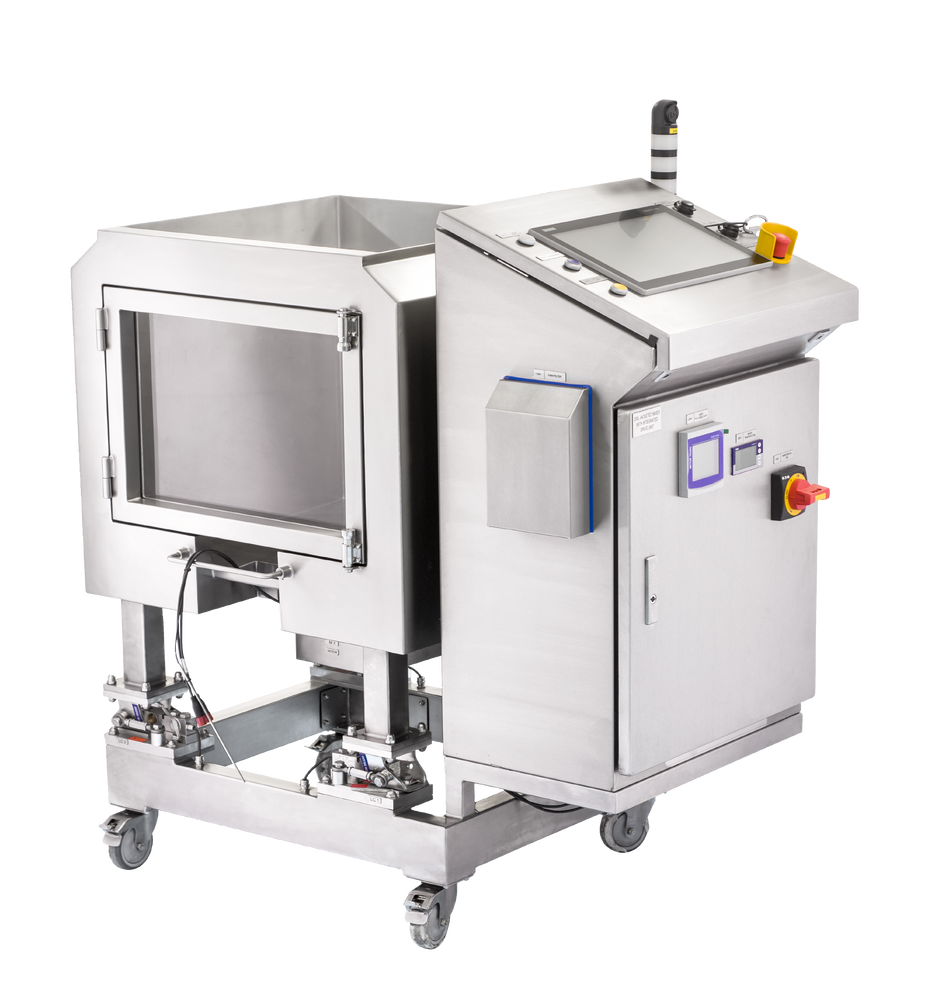
Levitating impeller technology took it a step further by removing the last point of mechanical contact — the impeller itself is magnetically suspended in the fluid rather than resting on a bearing or pivot. No bearing means no particulate generation from wear, no localized friction heat, and lower shear at the point that matters most. It’s a genuinely different mixing experience for a shear-sensitive cell line, and it’s where a lot of current single-use platforms — PharmNXT’s NXTmix among them — have landed: magnetically coupled and levitating, developed for exactly the shear-sensitive cell culture and viral vector work now scaling across the region’s biologics facilities.
Comparing the Technologies on the Table
Magnetic coupling and levitating impellers aren’t the only options, and the right choice still depends on the application. Standard bottom-mounted magnetic mixers with a fixed bearing remain a cost-effective, well-proven choice for less shear-sensitive work like buffer and media prep, where a small amount of bearing wear over a single use isn’t a meaningful risk. Levitating impeller designs earn their premium where shear sensitivity is the whole point — cell culture, viral vectors, anything where a compromised membrane or aggregate formation is the failure mode you’re actually trying to avoid.
Rocking motion systems and orbital shakers work differently altogether — instead of an impeller moving through the fluid, the whole vessel moves, which is gentle and mechanically simple but limits scale and struggles with viscous fluids or fast powder dissolution. Paddle mixers sit somewhere in between: effective for moderate-viscosity work and often the pragmatic choice where cost matters more than absolute shear minimization. Powder induction systems solve a different problem entirely — getting dry material into solution quickly without an operator standing over an open vessel manually sifting powder into a vortex, which is as much a contamination and ergonomics question as a mixing one.
The honest answer for most engineers evaluating these options isn’t “which is best” — it’s “which failure mode can this process least afford,” and working backward from there.
Engineering Considerations That Actually Drive Scale-Up
Scale-up is where mixing theory meets reality, and where most of the expensive surprises live. Mixing time doesn’t scale linearly with vessel volume, which is why a process that mixes perfectly at 50 liters can develop dead zones at 500. Flow regime — whether fluid moves in smooth, predictable layers or in the chaotic, well-blended motion engineers actually want — is conceptually captured by Reynolds number: low values mean laminar, orderly flow that mixes slowly; high values mean turbulent flow that mixes fast but generates more shear. Landing in the right zone for the application, at every scale, is the real engineering problem.
Power input and tip speed are the levers available to shift that flow regime, but they’re not free levers — push tip speed up to shorten mixing time, and shear forces at the impeller edge climb with it, which is exactly what a shear-sensitive process can’t tolerate. Dead zones — pockets where fluid barely moves — are often invisible until a batch fails, which is why CFD-assisted design has become standard practice for serious single-use mixer development rather than a nice-to-have: modeling flow patterns before cutting a single prototype catches geometry problems that would otherwise only surface during a costly scale-up run.
This is also where bag and vessel geometry stop being packaging details and start being engineering decisions. A bag with the wrong aspect ratio or port placement can undermine an otherwise well-designed impeller — part of why platforms like PharmNXT’s XELTA Mix Bags are engineered around their paired mixer’s specific flow characteristics rather than treated as a generic container, tuned for consistent fluid dynamics across the range of fill volumes a facility actually runs.
Buffer and Media Preparation: The Unglamorous Workhorse
It’s easy to focus engineering attention on the bioreactor and treat buffer and media prep as a solved problem. It isn’t. Powder dissolution is genuinely one of the harder mixing challenges in the whole process — undissolved particulate can clog downstream filters, and getting a high concentration of salt or protein powder into solution without a persistent vortex or a dead zone at the base of the vessel takes real engineering, not just a bigger motor.
pH adjustment adds another layer: add acid or base too fast, without adequate local mixing, and transient pH extremes can degrade sensitive components even if the final bulk pH reads correctly on a probe. Salt dispersion has a similar failure mode — uneven distribution during buffer prep doesn’t always show up until osmolality or conductivity testing flags an out-of-spec batch downstream. Intermediate hold steps, where a prepared buffer or media sits before use, add their own requirement: enough agitation to prevent settling or stratification without introducing unnecessary shear or foam over an extended hold.
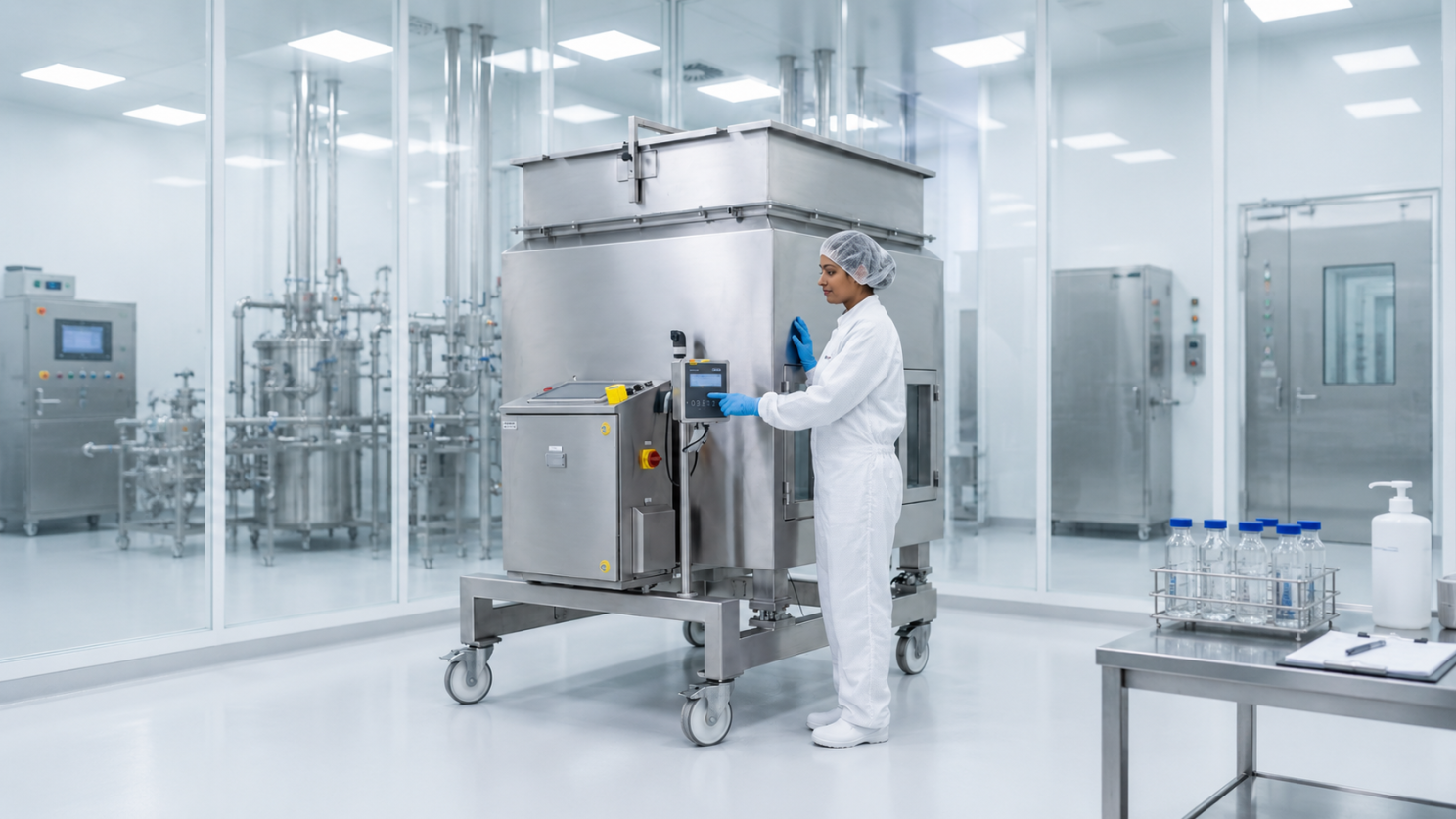
This is where mixing bag design earns its keep — a bag like XELTA Mix Bags, built with geometry optimized for the flow pattern its paired mixer generates and film chemistry compatible with the actual chemistries being dissolved, lets a buffer prep recipe transfer reliably from a smaller bag to a larger one. And once that buffer or media is ready, how it moves matters almost as much as how it was made — standardized fluid transfer assemblies, the kind XELTA KoNXT assemblies are built around, keep the pathway closed from preparation vessel to point of use and make facility integration considerably less painful when a process moves between suites or scales.
Validation and Regulatory Considerations
None of this engineering matters if it can’t be shown to be repeatable, and that’s where mixing quietly becomes one of the more validation-heavy topics in the process. Batch-to-batch consistency has to be demonstrated, not assumed — mixing time, speed, and homogeneity endpoints need to be defined, justified, and tied to actual process data rather than inherited from a supplier’s generic operating range, which is exactly the kind of evidence GMP audits increasingly expect to see documented, not just practiced.
Single-use components bring their own validation load: extractables and leachables data specific to the bag film and the actual product or buffer contact conditions, not just a generic supplier package. Documentation needs to trace an assembly back to its manufacturing lot, and supplier qualification has to go deep enough to cover the mixer’s magnetic drive components and the bag’s film and weld integrity, not just the finished assembly. None of this is unique to mixing, but mixing sits early enough in the process that a validation gap here tends to surface — expensively — much later downstream.
Where Mixing Technology Is Headed
Digital twins are moving from conference-talk territory into real deployment — pairing real-time process data with predictive models that flag a developing dead zone or an off-target mixing time before it produces an out-of-spec batch, rather than after. Process analytical technology, increasingly built around inline sensors rather than manual sampling, is starting to give engineers a live read on homogeneity and dissolution instead of a single end-point check.
Automated recipe management is solving a less glamorous but very real problem: making sure a mixing recipe that worked at one site, on one operator’s shift, actually reproduces on a different mixer at a different scale — the same platform-consistency logic that’s reshaping how facilities think about technology transfer generally. AI-assisted process optimization is starting to shorten the design-of-experiments cycle for finding the right speed and time parameters, rather than replacing the engineering judgment behind them. And as more of this capacity gets built as modular, flexible infrastructure — a trend visible right across the manufacturing hubs discussed here — sustainability is becoming a real design input, not an afterthought: less plastic waste per liter processed, more efficient power draw per batch, mixing systems designed to be part of that calculation rather than exempt from it.
Closing Thought
Mixing rarely gets the attention bioreactors and chromatography skids get, and that’s probably backwards — it’s often the first place a process either earns the consistency it needs or quietly loses it. As manufacturing capacity keeps scaling across South Korea, Singapore, Southeast Asia, and India — much of it engineered and manufactured in the region rather than imported wholesale, PharmNXT’s own facility in Chakan and its exports to 14-plus countries being one example of that shift — the facilities getting mixing right early are the ones that won’t be relearning these lessons at commercial scale.
What’s the mixing problem you’ve actually lost time to — a dead zone nobody predicted, a scale-up that didn’t hold, a buffer batch that failed for reasons that took too long to trace back? That’s usually where the real engineering lessons live.