

Why the industry’s most debated sterility requirement is also one of its most operationally complex — and what that means for facilities running disposable systems.
The Filter at the Centre of Everything
In sterile biologics manufacturing, the sterilising-grade filter occupies a unique position. It is often the last line of defence between a bulk biological product and a sterile drug substance or drug product. Everything upstream — cell culture, harvest, purification, buffer exchange — can be executed with precision, and a single undetected filter integrity failure can compromise the entire batch.
This is not a theoretical risk. Filter failures in aseptic manufacturing are documented. They are rare, but when they occur, the consequences are severe: batch losses, investigations, potential patient safety events, and regulatory scrutiny that can extend well beyond the incident itself.
The 2022 revision of EU GMP Annex 1 has brought renewed focus to how the industry manages this risk — and specifically, to a requirement that has generated more operational discussion than almost anything else in the revised document: Pre-Use Post-Sterilisation Integrity Testing, or PUPSIT.
Understanding PUPSIT is not just a regulatory exercise. It is a window into a broader question about how sterility assurance is achieved in modern biologics manufacturing — and why that question is increasingly relevant to facilities across Southeast Asia and South Korea operating under growing export-driven regulatory pressure.
Sterilising-Grade Filtration: The Foundation
A sterilising-grade filter, by definition, produces a sterile effluent when challenged with a bacterial suspension of Brevundimonas diminuta at a minimum concentration of 10⁷ colony-forming units per cm² of filter surface area. This is validated per ASTM F838-15 and is the basis on which 0.2 μm (nominal) membrane filters earn their sterilising-grade designation.
What this means in practice: the filter’s retention capability is established through manufacturer validation. The end user’s responsibility is to confirm — through integrity testing — that the filter unit installed in their specific process configuration actually performs as validated. A filter that passes integrity testing is not assumed to be sterile; it is confirmed to have the structural integrity necessary to deliver its validated retention performance.
This distinction matters. Integrity testing does not measure sterility. It measures the physical condition of the membrane as a proxy for retention capability. A filter with a compromised membrane — cracked, incompletely wetted, or damaged during installation — will fail integrity testing precisely because its pore structure is no longer consistent with the validated retention claim.
The two primary integrity test methods — bubble point testing and forward flow (diffusion) testing — work by different mechanisms but serve the same purpose. Bubble point measures the minimum pressure required to displace wetting liquid from the largest pore. Forward flow measures dissolved gas diffusion across a fully wetted membrane under differential pressure. Both methods generate pass/fail outcomes against acceptance criteria that must be established during filter qualification — not adopted generically from supplier data sheets.
What PUPSIT Is, and Why It Exists
The logic behind PUPSIT is straightforward once you understand what it is designed to address.
Standard practice in most facilities has historically been to perform filter integrity testing after the filtration operation — confirming, once product has passed through, that the filter retained its integrity throughout the run. This post-use integrity test serves a critical function: a failed result triggers an investigation and potential batch rejection.
But there is an inherent limitation in this approach. If the filter was damaged during sterilisation or assembly — before product contact — the post-use test will detect the failure, but only after product has already passed through a compromised membrane. The sterile boundary was breached from the beginning of the filtration step; the test merely confirmed it at the end.
PUPSIT closes this gap. By requiring integrity testing after sterilisation and system assembly, but before product contact, it confirms that the filter’s sterile boundary is intact at the point of use — before any product is exposed to risk. If PUPSIT fails, the filter is rejected before it ever contacts product. The batch is protected.
Annex 1 (2022) states this expectation directly: for sterilising filters used in the manufacture of sterile products, pre-use integrity testing should be performed after sterilisation and assembly, prior to filtration. The document acknowledges that where PUPSIT cannot be performed, a documented risk assessment justifying the alternative approach must be in place.
The regulatory intent is unambiguous. What is less straightforward is the implementation.
The Operational Reality of PUPSIT in Single-Use Systems

Here is where the real industry conversation begins — because implementing PUPSIT in a single-use manufacturing setup is not as simple as connecting a pressure transducer and running a test.
In a traditional stainless-steel filtration system, the filter housing and associated piping are fixed. The system can be designed with dedicated vent and drain ports that allow a test gas to be introduced after sterilisation, the diffusion test to be run, and the system to be drained and dried before product introduction. The design accommodates PUPSIT as an integrated process step.
In a single-use filtration assembly, the situation is different. The filter is housed within a disposable capsule. The upstream and downstream fluid pathways are pre-assembled tubing sets, often gamma-irradiated as a complete assembly. There is no inherent provision for gas introduction and draining between sterilisation and product filtration — because the assembly was not designed with PUPSIT as a process step.
Retrofitting PUPSIT capability into existing single-use filtration setups requires specific design modifications:
Gas introduction ports upstream of the filter must be incorporated into the assembly design — typically a sterile vent filter or a dedicated test gas inlet — that allows pressurised nitrogen or air to be introduced without compromising the sterile boundary.
Downstream drainage must be achievable without exposing the post-filter fluid pathway to contamination. This often requires a dedicated drainage line or a valve configuration that allows test fluid to be evacuated before product flow begins.
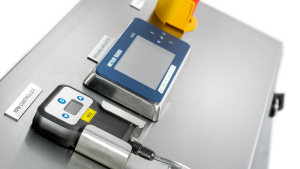
Automated integrity test equipment — instruments like the Sartocheck or Palltronic systems — must be connectable to the single-use assembly without introducing integrity risks at the test connection point. Aseptic connector design at these interfaces becomes a validation consideration in its own right.
Wetting and drying protocols must be established and validated. A membrane that is not uniformly wetted will generate false failure results. A membrane that retains excess wetting liquid in the downstream pathway creates product dilution or contamination risk. Neither outcome is acceptable.
For facilities running large-scale single-use filtration at 200L to 2,000L batch volumes, these are not trivial engineering challenges. They require custom assembly design, process development, and validation investment that many facilities did not anticipate when they initially deployed single-use filtration systems.
The Engineering and QA Perspectives — Which Are Not Always Aligned
It is worth being direct about a tension that exists inside most facilities attempting PUPSIT implementation: engineering and QA do not always approach it from the same starting point.
Engineering teams typically focus on process efficiency. Their concern is that PUPSIT adds a process step — gas introduction, testing, drainage, drying — that extends the filtration setup time, introduces additional connection events, and creates potential for introduction of contamination at the test interfaces. In a manufacturing schedule where filtration setup is on the critical path, these are legitimate operational concerns.
QA and validation teams are focused on the sterility assurance argument. From their perspective, a post-use-only integrity testing strategy carries a documented risk — small but non-zero — that a damaged filter will process product before the failure is detected. Annex 1 has acknowledged this risk explicitly by requiring PUPSIT or a documented risk-based justification for its absence.
The resolution requires collaboration rather than compromise. Assembly design must accommodate PUPSIT without creating excessive connection complexity. Test protocols must be validated to minimise setup time without sacrificing test sensitivity. Risk assessments must be genuinely rigorous — not rationalizations for avoiding implementation.
Where this collaboration works well, PUPSIT becomes an integrated process step rather than a regulatory burden. Where it does not, PUPSIT either gets implemented poorly — with inadequate assembly design and undertrained operators — or gets rationalized away with risk assessments that would not survive close regulatory scrutiny.
System Design: Getting Ahead of the Problem
The most efficient path to PUPSIT compliance in single-use setups is designing for it from the start — not retrofitting it into an assembly that was never intended to accommodate it.
This means several things at the assembly design stage:
Filter capsule selection should consider the availability of pre-validated PUPSIT-compatible housing configurations. Several major filter manufacturers now offer single-use capsule designs with integrated vent ports and validated PUPSIT protocols. These are the appropriate starting point for new process designs.
Manifold architecture should provide clearly defined test gas inlet and drainage pathways that can be connected and sealed aseptically without introducing dead legs or connection complexity that elevates operator error risk.
Defined Tubing Routing documentation should treat the PUPSIT setup configuration as a distinct assembly state — with the same level of visual instruction and operator qualification requirements as the production configuration.
The supplier relationship matters here more than is often acknowledged. Single-use assembly suppliers who bring engineering depth to their product development — who understand the PUPSIT requirement and design assemblies around it, rather than leaving PUPSIT integration as the customer’s problem — significantly reduce the validation burden on their customers. This kind of engineering-forward approach to single-use system design is what differentiates suppliers who contribute to their customers’ compliance programs from those who simply supply components.
Companies operating in this space who combine regional supply reliability with genuine engineering capability in single-use system design are becoming increasingly relevant as Asian facilities navigate PUPSIT implementation. PharmNXT Biotech’s presence across 14+ countries, with an approach built around assembly consistency and sterility assurance support, reflects the direction that regional single-use supply relationships need to move — toward technical partnership rather than transactional procurement.
Documentation and Compliance: What Regulators Will Want to See

Whether a facility implements PUPSIT or documents a risk-based justification for its absence, the documentation expectation under Annex 1 is substantial.
For facilities implementing PUPSIT, the validation package should include: filter qualification data demonstrating performance under process-representative conditions; PUPSIT protocol validation with defined acceptance criteria; wetting and drying procedure validation; operator qualification records specific to the PUPSIT assembly configuration; and batch record documentation that captures PUPSIT results as a critical process parameter.
For facilities relying on a risk assessment in lieu of PUPSIT, that assessment must be product-specific, process-specific, and genuinely rigorous. It must identify the specific failure modes that PUPSIT would address, evaluate the probability and consequence of those failures under actual process conditions, and demonstrate that alternative controls — bioburden monitoring, housing pressure hold tests, post-use integrity testing sensitivity — provide adequate compensatory sterility assurance. Generic risk assessments that reference industry norms without facility-specific analysis are unlikely to satisfy a competent regulatory inspection.
Asia’s Regulatory Trajectory and What It Means for Facilities Here
Across Southeast Asia and South Korea, the regulatory environment is moving in one clear direction: closer alignment with EU GMP and FDA expectations, driven by the export ambitions of the region’s rapidly expanding biologics manufacturing sector.
South Korea’s MFDS has been progressively tightening its GMP expectations for sterile products. Singapore’s HSA operates at a standard that is already broadly consistent with EU GMP. Malaysia’s NPRA and Indonesia’s BPOM are both on trajectories that reflect growing international harmonisation.
For facilities in these markets that manufacture for export — or that supply CDMOs whose products reach European or US markets — PUPSIT is not a future consideration. It is a present requirement that needs to be addressed in current facility and process designs.
The facilities that will navigate this transition most efficiently are those that treat Annex 1 compliance not as a regulatory response exercise but as an engineering design standard. PUPSIT-capable single-use filtration systems, designed from the ground up with integrity testing integrated into the process flow, are operationally more robust than retrofitted approaches — and they generate the validation evidence that regulators expect to see.
Closing Perspective
PUPSIT is not the most technically complex requirement in Annex 1. But it is among the most operationally revealing — because implementing it properly requires engineering, QA, validation, and supply chain functions to work together in a way that exposes weaknesses in any one of them.
A facility that has designed PUPSIT-capable single-use filtration assemblies, validated the testing protocol under process-representative conditions, trained its operators against documented installation procedures, and built the batch record infrastructure to capture results consistently — that facility has done something meaningful. It has engineered sterility assurance into a critical process step rather than testing for it at the end.
That distinction — between engineered sterility assurance and confirmatory testing — is at the heart of what Annex 1 is asking the industry to do. The question is not whether to comply. It is whether to comply well.
#PUPSIT #Annex1 #SterileManufacturing #FilterIntegrityTesting #SingleUseSystems #GMP #AsepticProcessing #BiologicsManufacturing #BioprocessEngineering #PharmNXTBiotech #CDMOAsia #ValidationEngineering