
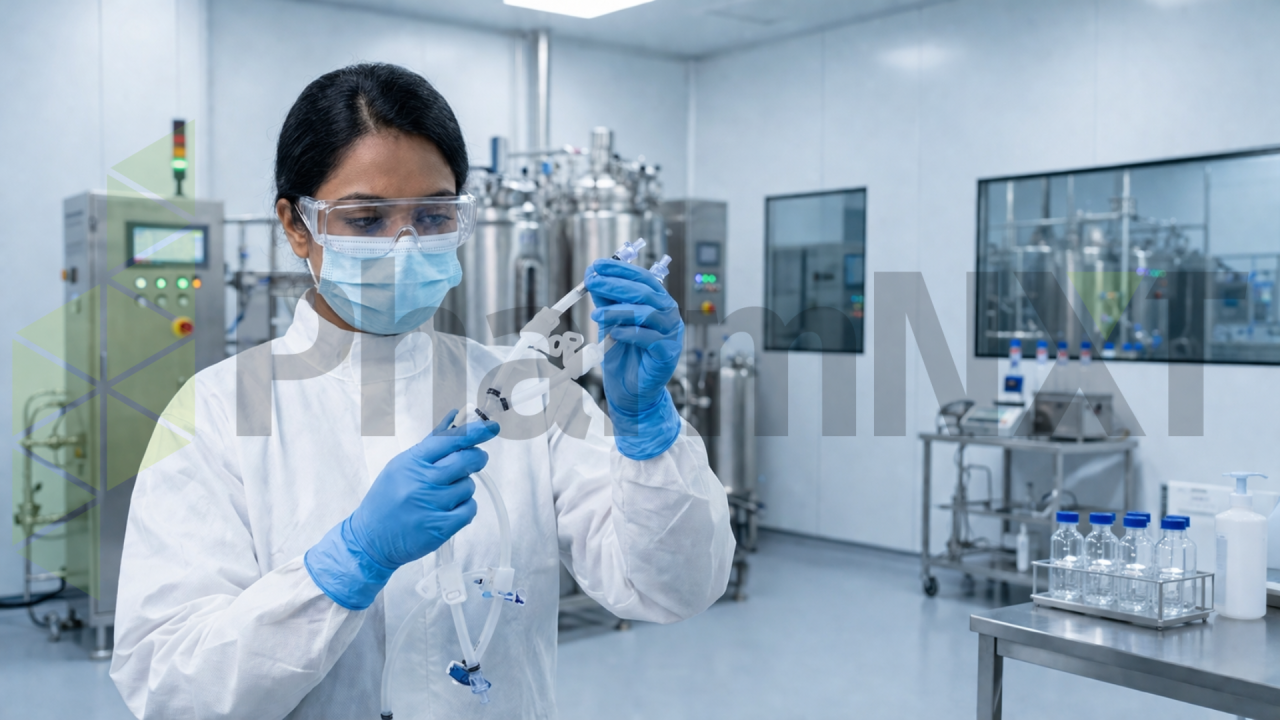
The region is building fast. But going fully single-use is more than a procurement decision — it’s a systems question.
Asia’s Biopharma Moment
Asia’s biopharmaceutical industry is no longer just catching up — in several ways, it is setting the pace. From South Korea’s globally competitive CDMOs to the rapid emergence of biotech clusters across Southeast Asia, the region is investing heavily in biologics manufacturing infrastructure.
In the middle of this expansion, a significant design question keeps surfacing: should new biomanufacturing facilities go fully single-use?
Not partially. Not hybrid. End-to-end single-use systems — from upstream cell culture to downstream purification — with no stainless steel bioreactors or fixed piping. It’s a model that a growing number of Western manufacturers have embraced. But is Asia truly ready for it?
The honest answer: it depends on where you are, and what you are trying to make.
What “Fully Single-Use” Actually Means
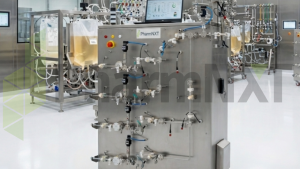
A fully single-use biomanufacturing facility replaces traditional fixed equipment — stainless steel tanks, glass columns, hard-piped systems — with disposable bioprocess components used once and discarded. This applies across the entire production chain:
Upstream: Single-use bioreactors (rocking or stirred-tank designs) for cell culture and fermentation.
Downstream: Disposable chromatography cartridges, single-use filtration assemblies, sterile transfer bags, and tubing sets.
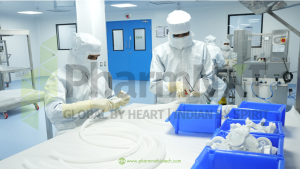
Integration: Pre-sterilized, gamma-irradiated assemblies that eliminate CIP/SIP cycles and reduce cross-contamination risk between product runs.
In principle, the benefits are compelling: faster facility setup, lower capital expenditure, reduced cleaning validation burden, and inherent flexibility for multi-product manufacturing. For a region actively building new capacity, these are highly relevant advantages.
Why Asia Is Moving Toward Single-Use
Several converging factors are accelerating adoption across the region.
Speed to market is acute pressure in Asia’s fast-moving biologics pipeline. Getting a facility operational in 18 months rather than four years is a meaningful competitive differentiator. Single-use platforms significantly compress construction and qualification timelines.
Capital efficiency matters enormously for emerging biotech companies and governments building first-generation facilities. Single-use eliminates large utility infrastructure — steam generation, clean-in-place systems, extensive cleaning agent management — reducing upfront investment substantially.
CDMO growth across South Korea and Southeast Asia is driving demand for flexible, multi-product facilities. A CDMO running three to five different client products simultaneously cannot afford months of changeover and cleaning validation between campaigns. Single-use makes this operationally viable.
Biosimilar and mAb production is scaling rapidly across the region, particularly for the ASEAN market and export. Many of these products are well-suited to single-use scale ranges — typically up to 2,000L bioreactors — which now represent mature, commercially proven technology.
Regional Readiness: A Tale of Two Landscapes
South Korea sits at the most advanced end of the regional spectrum. Large CDMOs like Samsung Biologics and Celltrion have built sophisticated GMP infrastructure with experienced bioprocess workforces. Single-use is well-integrated at clinical manufacturing scale, and regulatory alignment with FDA and EMA standards is strong. That said, commercial-scale production remains predominantly stainless steel — a reflection of volume economics more than readiness gaps.
Southeast Asia presents a more varied picture. Singapore is arguably the region’s most mature market for single-use adoption, with established MNC manufacturing sites and a well-developed regulatory framework. Malaysia and Thailand are mid-tier — growing in capability, with increasing CDMO activity. Indonesia and Vietnam are earlier stage, with significant long-term potential but still developing the foundational infrastructure that makes fully single-use operations viable.
The gap between Singapore and Vietnam, in terms of single-use readiness, is wider than many industry conversations acknowledge.
The Real Challenges — Beyond the Brochure
Supply chain fragility is the most underappreciated risk. Asia’s single-use ecosystem is heavily import-dependent. Most assemblies and critical polymer films are manufactured in North America or Europe. Lead times of 16–24 weeks for customized assemblies, combined with post-pandemic supply disruptions, have exposed serious vulnerabilities. A fully single-use facility with no stainless steel backup has no operational fallback when components are delayed.
Scalability ceiling is a real constraint. Single-use bioreactors above 2,000L remain less commercially proven and more expensive per unit than stainless equivalents. For manufacturers targeting large-volume commercial production — particularly vaccines and biosimilars at population scale — the economics of going fully single-use become harder to justify.
Waste management is frequently underestimated during facility planning. A fully single-use operation generates significant volumes of plastic waste — bags, tubing, filters, connectors — that must be inactivated and responsibly disposed of. In markets without established biosafety waste infrastructure, this becomes both a regulatory and sustainability compliance problem.
Regulatory alignment is still evolving. EMA Annex 1 revisions and FDA guidance on leachables, extractables, and container-closure compatibility have raised the validation bar for single-use systems globally. Many Asian regulatory bodies are developing equivalent guidance, but the ambiguity creates friction for facilities targeting both domestic and export markets simultaneously.
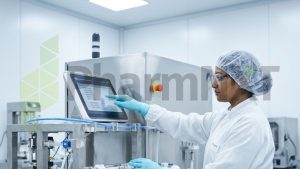
Operational readiness is often the quiet gap. Single-use manufacturing looks simpler but demands a distinct set of competencies — assembly integrity testing, sterile connector handling, irradiation qualification, extractables risk assessment. These are specialized skills that require deliberate training programs, and those programs are still nascent across much of Southeast Asia.
What Needs to Change to Make This Work
The pathway to fully single-use facilities in Asia is real, but it requires deliberate ecosystem development rather than simply importing a Western facility model.
Localised supply chains are non-negotiable. The region needs regional assembly and sterilisation capacity — ideally within Asia-Pacific — to reduce lead times and strategic dependence on transatlantic supply routes. This is both a business continuity and a national resilience priority that governments and industry need to address jointly.
Supplier qualification and diversification must become standard discipline. Facilities that rely on a single-source supplier for critical assemblies face unacceptable operational risk in a fully single-use model. Dual-sourcing qualification is not an optional overhead — it is a risk management baseline.
Training infrastructure needs to mature at pace with facility growth. Practical, hands-on training in single-use assembly, integrity testing, and troubleshooting remains insufficient for the scale of workforce expansion underway across the region.
Regulatory clarity specific to fully single-use operations — addressing extractables data packages, change control for assembly components, and waste management protocols — would meaningfully accelerate adoption by giving manufacturers a coherent compliance pathway.
Building Toward a Sustainable Ecosystem
This is where the conversation shifts from theoretical to practical — and where the work of building regional supply resilience matters.
PharmNXT Biotech has built its approach around exactly this gap: regional availability and reliable supply of bioprocess consumables and single-use assemblies across 14+ countries. Rather than operating as a pure import distributor, the company focuses on proximity to manufacturers and supply chain reliability — directly addressing the fragility that makes fully single-use operations operationally risky for Asian facilities operating at scale.
The adoption pattern emerging across the region reflects the broader trajectory: leading biopharma companies in South Korea and Southeast Asia are integrating single-use components selectively — beginning with upstream bioreactors and fluid transfer applications — and building toward more comprehensive single-use workflows as local ecosystems, supplier networks, and regulatory frameworks mature. It is an incremental and defensible path.
The Near-Term Reality: Hybrid Wins
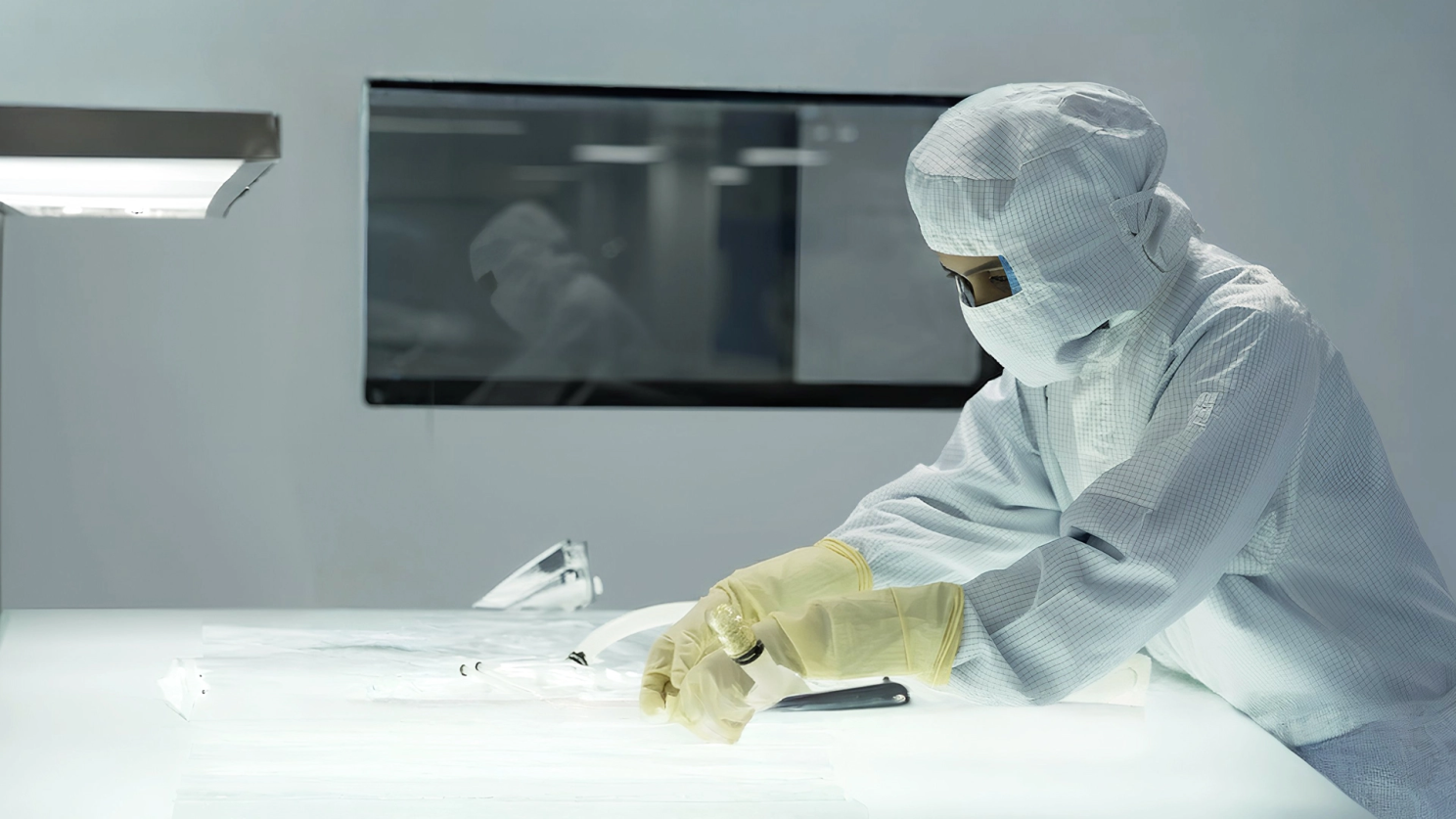
For the next five to seven years, the most realistic model for most Asian biomanufacturing facilities is not fully single-use — it is a thoughtfully designed hybrid. Stainless steel for large-volume, commodity-scale production. Single-use for clinical manufacturing, multi-product flexibility, and technology transfer campaigns where speed and cleaning validation avoidance matter most.
South Korea’s established CDMOs are largely already here. Southeast Asia’s emerging facilities are, for the most part, starting here — which is a pragmatic and defensible position given current supply chain realities.
Fully single-use commercial manufacturing in Asia is a long-term direction, not a near-term inevitability. The economics, the supply chains, and the regulatory frameworks will eventually align. But that alignment requires active investment — not just in equipment, but in the surrounding ecosystem.
Closing Perspective
The question is not really whether Asia is “ready” for fully single-use biomanufacturing — framed as binary, that question misses the point. Readiness is a spectrum, and different markets along the region are at different points on it.
What is clear is that the direction of travel is set. The facilities being designed today will anchor the region’s biologics capacity for the next 20 years. The decisions made now — about supply chain architecture, workforce development, regulatory engagement, and technology selection — will determine whether Asia builds genuinely resilient single-use capabilities or simply replicates dependencies from elsewhere.
The question is not whether to adopt single-use. It is whether Asia will build the ecosystem to sustain it.
#SingleUseSystems #Biomanufacturing #BiopharmaAsia #CDMO #Bioprocess #PharmNXTBiotech #SEABiotech #SouthKoreaBiopharma